From License to SaaS: The Revenue Recognition Minefield of Cloud Migration

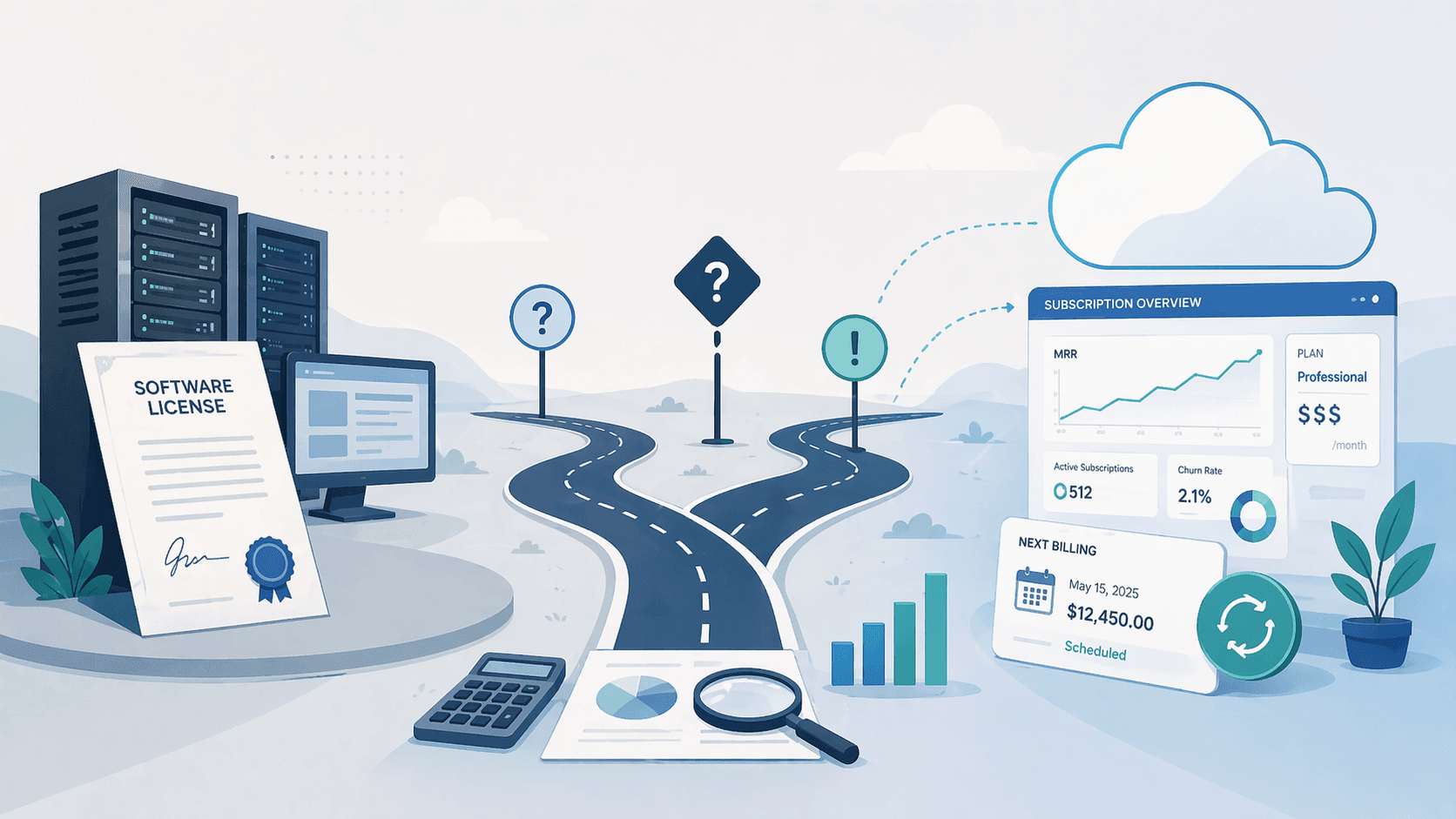
Companies that sold on-premise software licenses for years are migrating customers to the cloud. The customer gives up their right to run the software locally, cancels the license, and starts a SaaS subscription instead.
The business logic is straightforward. The accounting? Genuinely unresolved.
The FASB added this to their technical agenda, studied it, and then removed it without issuing guidance. That means two different accounting approaches exist in practice — and both are considered acceptable. Which one you choose can materially change your reported revenue.
From KPMG's handbook, here's what you need to understand.
Why License-to-SaaS Conversions Are Accounting Minefields
The problem: a software license is a right to use intellectual property. Under ASC 606, revenue is recognized at a point in time — typically when the license is delivered. Once recognized, that revenue is done. The customer owns the right.
But when the customer converts to SaaS, they're giving that right back. They can no longer download or run the software. The license is revoked. The question: do you reverse the revenue you already recognized for the license?
There's no clear answer in the standard. Which is why two approaches exist.
Approach 1: The Return Approach
Under this approach, revoking the license is treated like a product return. The customer gave back the rights, so you reverse the revenue originally recognized for the license.
Then you recognize SaaS revenue going forward — ratably over the subscription period at the SaaS stand-alone selling price.
The impact: a revenue reversal hits your income statement at the modification date. If the license was a large deal recognized upfront months ago, the reversal can be significant. But the SaaS revenue going forward reflects the current reality of the arrangement.
Approach 2: The Prospective Approach
Under this approach, you don't reverse anything. The license revenue that was recognized stays recognized — because at the time it was delivered, the accounting was correct. The customer had the right, you recognized the revenue, done.
The modification is treated prospectively as a termination of the existing contract and creation of a new one. The remaining unrecognized consideration from the original contract plus the new SaaS consideration gets allocated to the remaining performance obligations (the SaaS subscription) going forward.
The impact: no revenue reversal. But the SaaS revenue recognized going forward might be above or below the stand-alone selling price — because it includes the carry-forward of any remaining consideration from the original license contract.
How to Choose Between Them
Both are acceptable. Neither is explicitly required or prohibited by Topic 606. KPMG notes this as an area of "diversity in practice" — meaning even among the Big Four, there isn't consensus.
Consistency. Whichever approach you choose, apply it consistently to all similar conversions. Switching between approaches for different customers will raise audit flags.
Substance of the conversion. Does the conversion look more like a return (customer gives back something they had) or a go-forward change (old deal ends, new deal starts)?
Financial statement impact. The return approach creates lumpier revenue (reversals). The prospective approach creates smoother revenue but may not reflect economic reality.
Auditor alignment. Get your auditor's input before choosing. They'll need to sign off on the approach, and it's better to align early than discover disagreement at year-end.
The Implied Rights Problem
Here's where it gets really complicated. If your company has a pattern of allowing license-to-SaaS conversions, that pattern creates implied rights.
Under ASC 606, an implied right is treated like an explicit contractual right. If customers reasonably expect they can convert their license to SaaS — because you've done it before, because your sales team mentions it, because it's industry practice — then a conversion option may exist in every license contract from inception.
That means you'd need to account for the conversion option at contract inception — potentially as a material right (separate performance obligation) or a right of return (variable consideration). Either way, it changes the accounting on your license deals from day one, not just the ones that actually convert.
One conversion isn't a pattern. Five might be. Ten almost certainly is. Track your conversion history and evaluate whether implied rights have emerged.
Adding a Conversion Option to an Existing License
Sometimes the modification doesn't convert the license immediately — it grants the customer the option to convert in the future. Different accounting.
If the conversion price would increase the contract price by an amount commensurate with the SaaS stand-alone selling price, the option is effectively a marketing offer — no accounting impact until exercised.
If the conversion price is at a meaningful discount to SSP, the option is a contract modification that changes the scope or pricing. Two approaches: treat the option as a right of return (reducing the transaction price by the estimated refund) or as a material right (allocating transaction price to the option and deferring).
How JustPaid Handles License-to-SaaS Transitions
JustPaid was built for companies that sell across multiple models — SaaS, licenses, and hybrid arrangements. When a customer converts, the platform identifies the modification, applies the chosen accounting approach (return or prospective), and adjusts revenue schedules automatically. The full conversion history is tracked for pattern analysis and audit documentation.
Key Takeaways
- License-to-SaaS conversions have no settled guidance. FASB studied it and walked away without issuing a standard.
- Two approaches: return (reverse license revenue) or prospective (no reversal, allocate forward). Both are acceptable.
- Choose one and apply it consistently. Auditor alignment early is critical.
- A pattern of conversions creates implied rights that can change accounting on all license contracts from inception.
- Track conversion history carefully. What starts as a one-off becomes a pattern faster than expected.
Frequently Asked Questions
Sources
- KPMG LLP, Revenue for Software and SaaS Handbook, December 2025 Edition.
- FASB, ASC Topic 606 (ASU 2014-09).
Navigating a license-to-SaaS migration? Schedule a demo to see how JustPaid handles multi-model transitions.
Get Started with JustPaid
Automate invoicing, streamline accounts receivable, and accelerate revenue with JustPaid. Compare JustPaid pricing plans or book a walkthrough.